Release notes
0.9.0-beta3
This version of Kanzi Particles works with Kanzi 4.0.0.
Added support for new features in Particle Mesh Emitter.
Enabled emission from mesh vertices and edges, in addition to surface emission.
Added support to generate random velocity based on mesh normals.
Added support to generate random rotation based on mesh normals.
See Using the Particle Mesh Emitter.
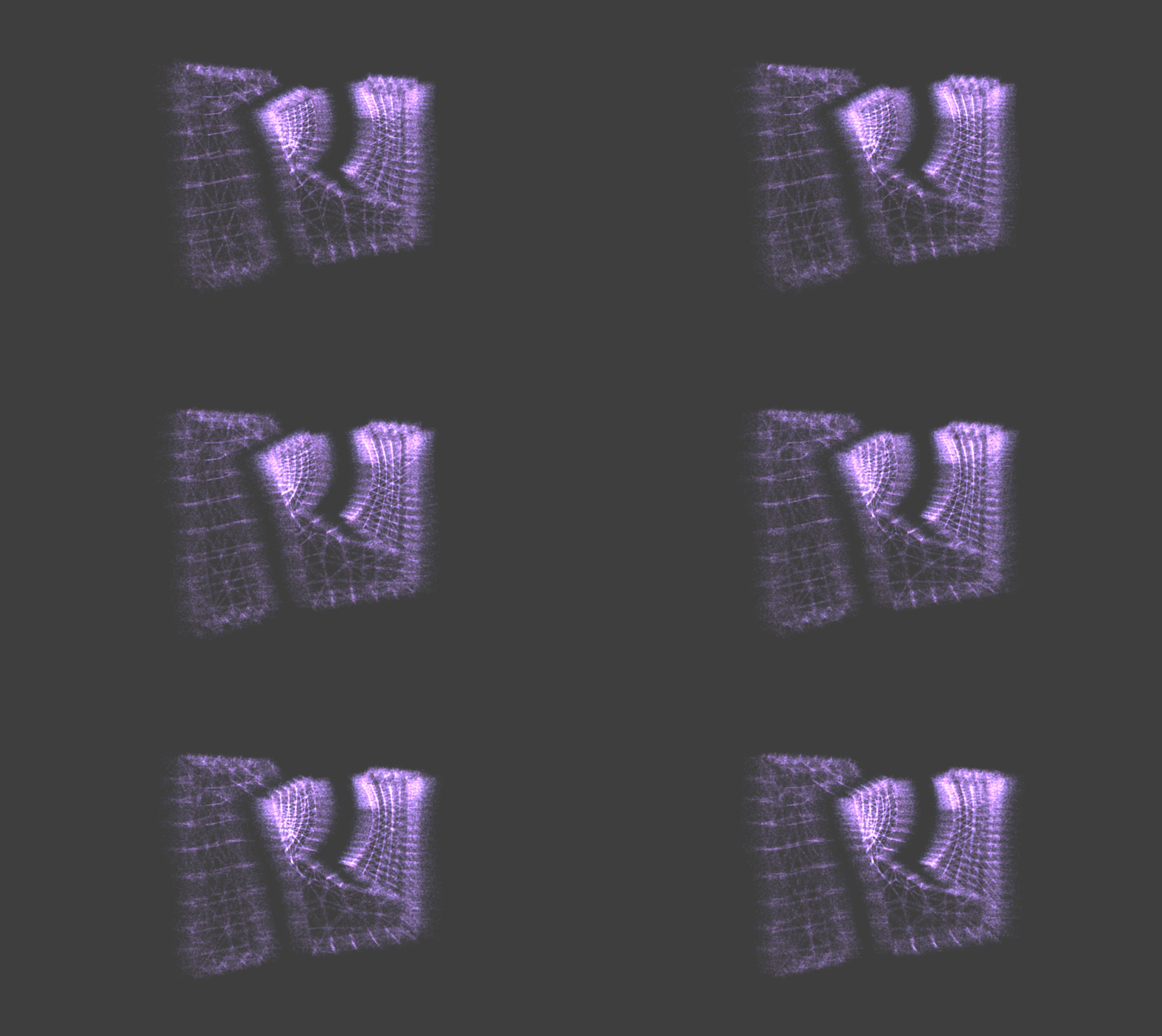
Introduced the Particle Drag Affector.
Introduced the Particle Trail Emitter.
Introduced the Particle Custom Emitter.
See Creating custom emission and simulation and Using the Particle Custom Emitter.
Introduced the Particle Custom Affector.
See Creating custom emission and simulation and Using the Particle Custom Affector.
Added support for random rotation velocity using the Rotation Velocity Minimum and Rotation Velocity Maximum properties.
Added support to adjust particles mass using the Mass Minimum and Mass Maximum properties.
Added support for reverse sorting using the new Reverse Sorting Order property.
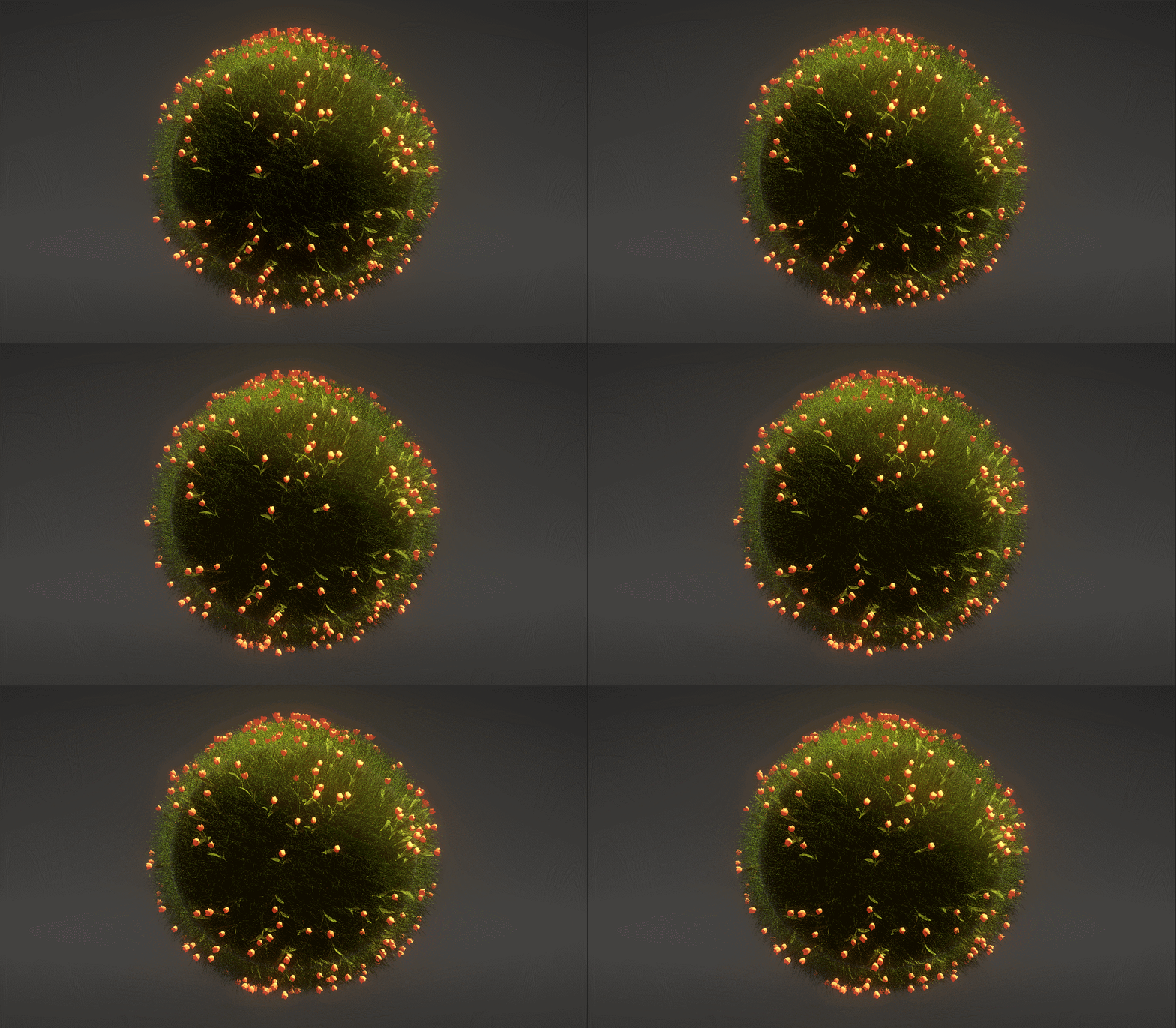
Added support for 3D particles rendering using the new Render Type and Particle Mesh properties.
See Rendering particles as 3D meshes.
Performance improvements:
Improved the loading time of particle effects, by enabling the use of precompiled compute shaders.
Improved performance of effects that use the Particle Mesh Emitter, by optimizing data transfer between CPU and GPU.
Usability improvements:
Enabled support to load meshes for Particle Mesh Emitter directly from GPU memory. Added support to use half floats for mesh attributes in Particle Mesh Emitter. These changes should simplify work with the Particle Mesh Emitter in Kanzi Studio.
Added support to load a default mesh for the Mesh Emitter if the specified mesh is not found.
Added a new API to simplify reading particle data from the particle buffer in vertex shaders used for particle rendering materials.
Added support to disable emitters and affectors using quick hide feature and Disable When Not Visible property in the Particle System node.
Changed the tooling for the Particle Force Affector.
Added support to control direction of force by using 3D rotation of the node.
Added support for Enable Bounding Box and Soft Range Offset properties to limit the area where the affectors affect particles.
Refactored existing particles properties to improve tooling and enable new features.
Refactored the Lifetime Average and Lifetime Variance properties to Lifetime Minimum and Lifetime Maximum properties.
Refactored the Scale Average and Scale Variance properties to Scale Minimum and Scale Maximum properties that use Vector3 instead of float property type.
Added support for non-uniform scaling of particles using the Enable Non Uniform Scale property.
Refactored the Rotation Minimum and Rotation Maximum properties to use Vector3 instead of float property type.
Renamed properties for the Particle Curl Affector to better reflect their functionality.
Added new templates, materials and other useful assets to the ParticleSystemSetup assets package project.
Notable fixes:
Fixed crashes that occurred when you used tooltips for a Curl Affector node.
Fixed the issue that caused the Application Player to fail on Windows.
Fixed artifacts in Particle Force Affector behavior that caused particles to exhibit repeating displacements instead of smooth motion.
0.8.0-beta2
This version of Kanzi Particles works with Kanzi 4.0.0-beta2.
Introduced the Particle Sphere Emitter.
Particle Sphere Emitter emits particles from within a volume the shape of a sphere or from its surface.
See Using the Particle Sphere Emitter.
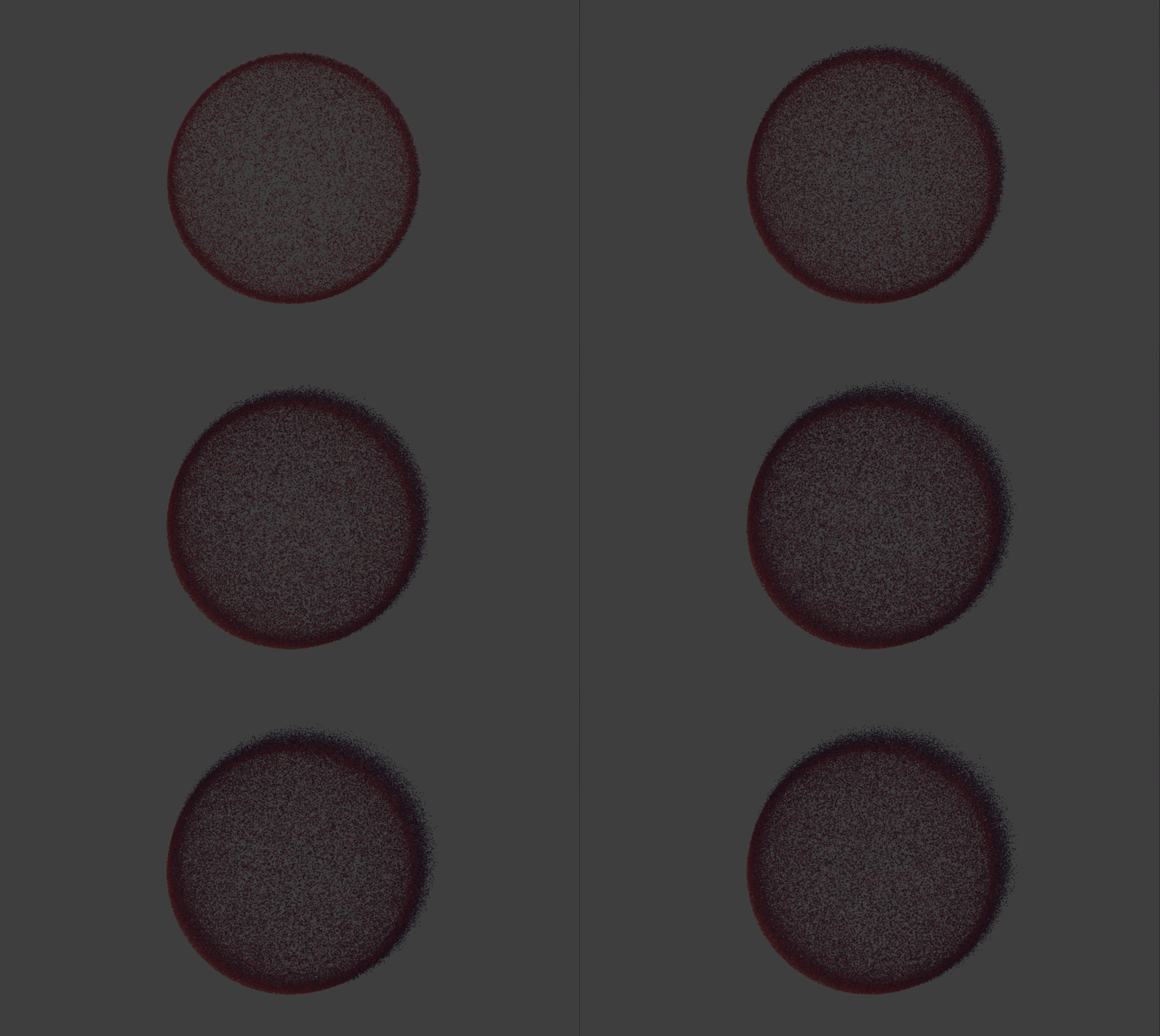
You can now use surface emission mode for Particle Box Emitter. See Using emitter nodes.
Introduced sorting of particles based on age.
Added support for fade-in and fade-out effects for particles with infinite lifetime.
Improved stability and performance of the Kanzi Particles.
Improved the way random values are generated in emission shaders to produce better behavior of particles.
Notable fixes:
Fixed sporadic crashes and unexpected particles behavior caused by updates in the Node Tree or changes in emitter node properties.
Fixed plugin compatibility issues with Thumbnail Rendering and Application Player.
Fixed the issue that caused the Kanzi Studio preview to terminate unexpectedly while launching the particles example.
0.7.0-beta1
This generation of Kanzi Particles works with Kanzi 4 and is not interchangeable with the Kanzi Particles that works with Kanzi 3. This version of Kanzi Particles works with Kanzi 4.0.0-beta1.
This generation of Kanzi Particles:
Uses GPU for particle simulation, while the previous generation uses CPU
Supports effects with more than a million particles, while the previous generation supports up to 100,000 particles
Has significantly better performance in comparison to the previous generation. Keep in mind that performance depends on the target device hardware: More particles require a better graphics processor.
This release of Kanzi Particles supports these emitter and affector types:
Particle Box Emitter
Particle Mesh Emitter
Particle Force Affector
Particle Curl Affector
Particle Point Affector
See Using emitter nodes and Using affector nodes.
Introduced sorting of particles based on camera depth to:
Simplify render pass setup to correctly render particles with other 3D objects in a scene.
Enable effects with larger particles, which in previous generation of Kanzi Particles showed glitches on particle sprites borders.
Introduced support for debugging rendering objects. This simplifies predicting of particle behavior based on settings of particles nodes.